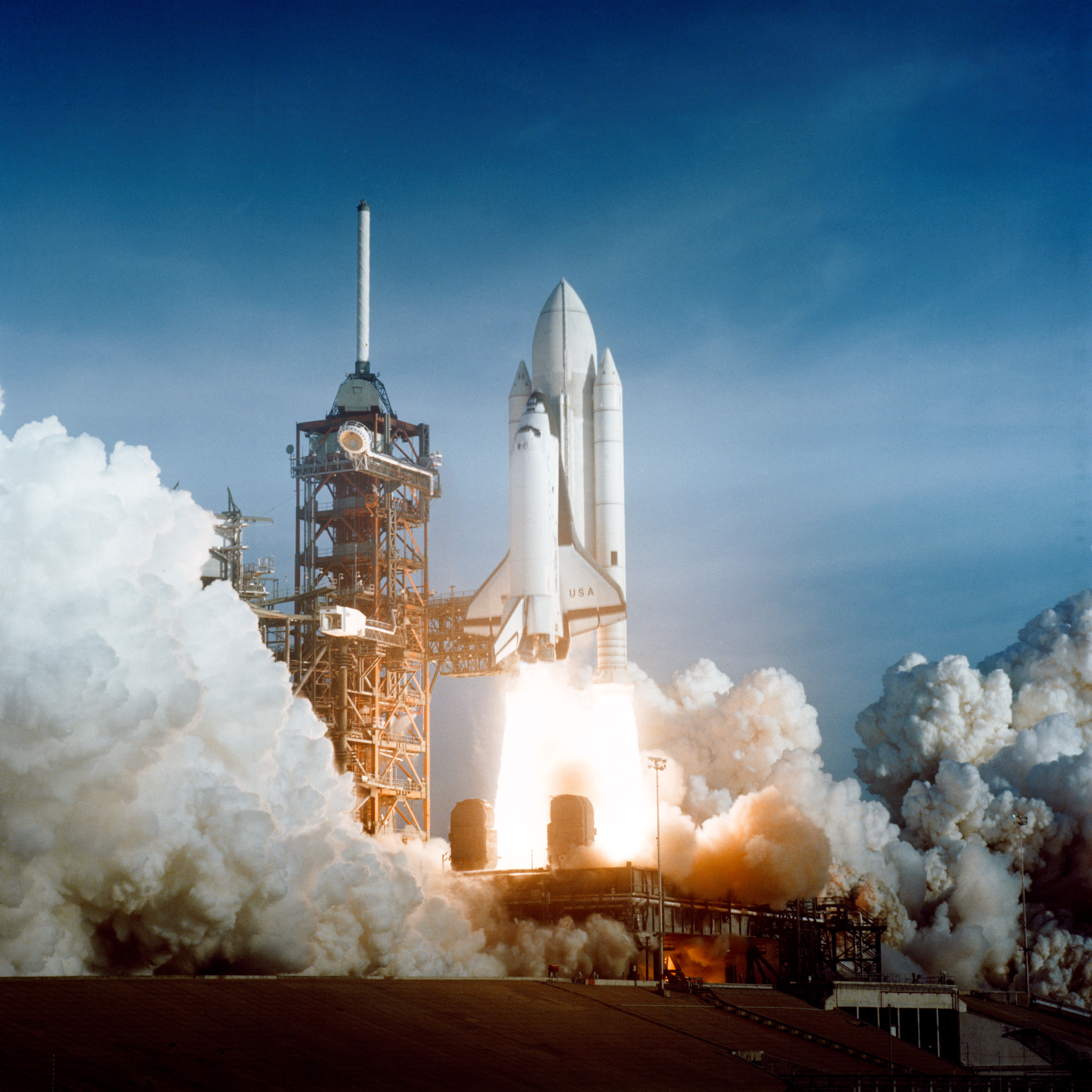
On February 1, 2003, excitement from onlookers turned to horror as debris from the Space Shuttle Columbia was spotted plummeting back to Earth. Of the seven astronauts on board, there were no survivors.

Just an hour and a half after the disaster occurred, the Columbia Accident Investigation Board (CAIB) was formed to thoroughly investigate the cause of the accident. Frequent press releases from the CAIB documented their findings, as increased transparency was one of the main goals of the board. Recovery of debris was an arduous task, as pieces of the shuttle were found from Texas all the way to Louisiana. After examination of the recovered components, it was concluded that damage to the left wing was the cause of the disaster. Around 81 seconds after Columbia’s liftoff, a piece of foam used to insulate the external fuel tank broke off and struck the shuttle’s left wing. The impact was strong enough to punch a hole in the thermal soaking protective layer, meant to protect the shuttle from the extreme heat due to atmospheric reentry. Upon reentry, the left wing’s internal structure became unstable, likely melting from the heat. This caused the shuttle to spin uncontrollably despite automatic and manual correction attempts, break apart, and mostly disintegrate.
NASA engineers discovered the impact on the left wing on the second day of the mission, after routine footage review of the launch.

A debris assessment team requested imaging be done on the wing to assess the damage but were denied multiple times by mission managers. Their reasoning for denial was fundamentally flawed: foam breaking off had happened before and caused no issues, therefor the likelihood of any incident occurring was low. Foam breaking off from the external fuel tank was extremely common, occurring more frequently than not. Mission management alleged that even if there was significant damage, the astronauts on board did not have the necessary materials to repair the damage. The CAIB found this to be true and concluded that the best course of action would have been to send a rescue mission to retrieve all crew members from the shuttle.
Safety concerns presented by engineers after the foam impact was discovered were downplayed by mission managers. Unfortunately, this was not the first Space Shuttle disaster that was caused by management ignoring safety concerns. The Challenger Space Shuttle disaster in 1986 was caused by similar structural damage being ignored by the mission managers. Engineers presiding over the Challenger had also brought dangers to the attention of mission management, who once again ignored their concerns. Time pressure to complete the International Space Station likely contributed to the Columbia disaster, since a deadline was deemed more important than the safety of several astronauts. Inside The Block Box, an incredibly well researched podcast on aviation disasters, explains that a general lack of funding may have also played a role in this disaster. A rescue mission for astronauts stuck in orbit would eat into the budget for the ISS's construction. NASA’s investigations into the Columbia disaster were thorough and resulted in increased transparency and a more horizontal command structure. Safety concerns are treated with incredible care following the incident. This transparency is evidenced by the enormous quantity of press releases and damage reports published by NASA in the years following. Independent engineering firms are now consulted far more often, since they have less to lose from delaying a mission. Pam Melroy, NASA’s deputy administrator, and an investigator in the aftermath of the Columbia disaster, emphasizes that seven people died for the organization to learn these lessons. Their deaths were not in vain, as safety concerns are treated with much greater scrutiny than they previously were. She explains that organizational silence was the key contributor to this disaster, and that concerns at any level should be treated with the utmost importance. The lessons NASA learned were paid for in blood and will not be forgotten.
Citations
· Primary Sources
“Space_Shuttle_Columbia_disaster_ET208_camera.Gif (640×480).” Accessed October 30, 2024. https://upload.wikimedia.org/wikipedia/commons/0/0d/Space_Shuttle_Columbia_disaster_ET208_camera.gif.
“Space_Shuttle_Columbia_launching.Jpg (6084×6084).” Accessed October 30, 2024. https://upload.wikimedia.org/wikipedia/commons/4/41/Space_Shuttle_Columbia_launching.jpg.
“STS-107_crew_in_orbit.Jpg (4096×4096).” Accessed October 30, 2024. https://upload.wikimedia.org/wikipedia/commons/5/5d/STS-107_crew_in_orbit.jpg.
Gehman, Harold W., et al. “Columbia Accident Investigation Board Report.” Ntrs.nasa.gov, 1 Aug. 2003, ntrs.nasa.gov/citations/20030066167.
· Secondary Sources
“Columbia Disaster | History & Crew | Britannica,” October 21, 2024. https://www.britannica.com/event/Columbia-disaster.
“Columbia NASA Press Releases - NASA,” January 12, 2004. https://www.nasa.gov/history/columbia-nasa-press-releases/.
Howell, Elizabeth, and Daisy Dobrijevic. “Columbia Disaster: What Happened, What NASA Learned.” Space.com, Space.com, 14 Nov. 2017, www.space.com/19436-columbia-disaster.html.
“Twenty Years after the Columbia Disaster, a NASA Official Reflects on Lessons Learned.” Morning Edition. NPR, February 1, 2023. https://www.npr.org/2023/02/01/1153150931/columbia-space-shuttle-disaster-20th-anniversary.
The, Inside. “Inside the Black Box: Episode 12 (Part 2) - STS-107 (the Columbia Shuttle Disaster).” Libsyn.com, 2020, blackboxpodcast.libsyn.com/episode-12-part-2-sts-107-the-columbia-shuttle-disaster. Accessed 17 Dec. 2024.
Comments
Post a Comment